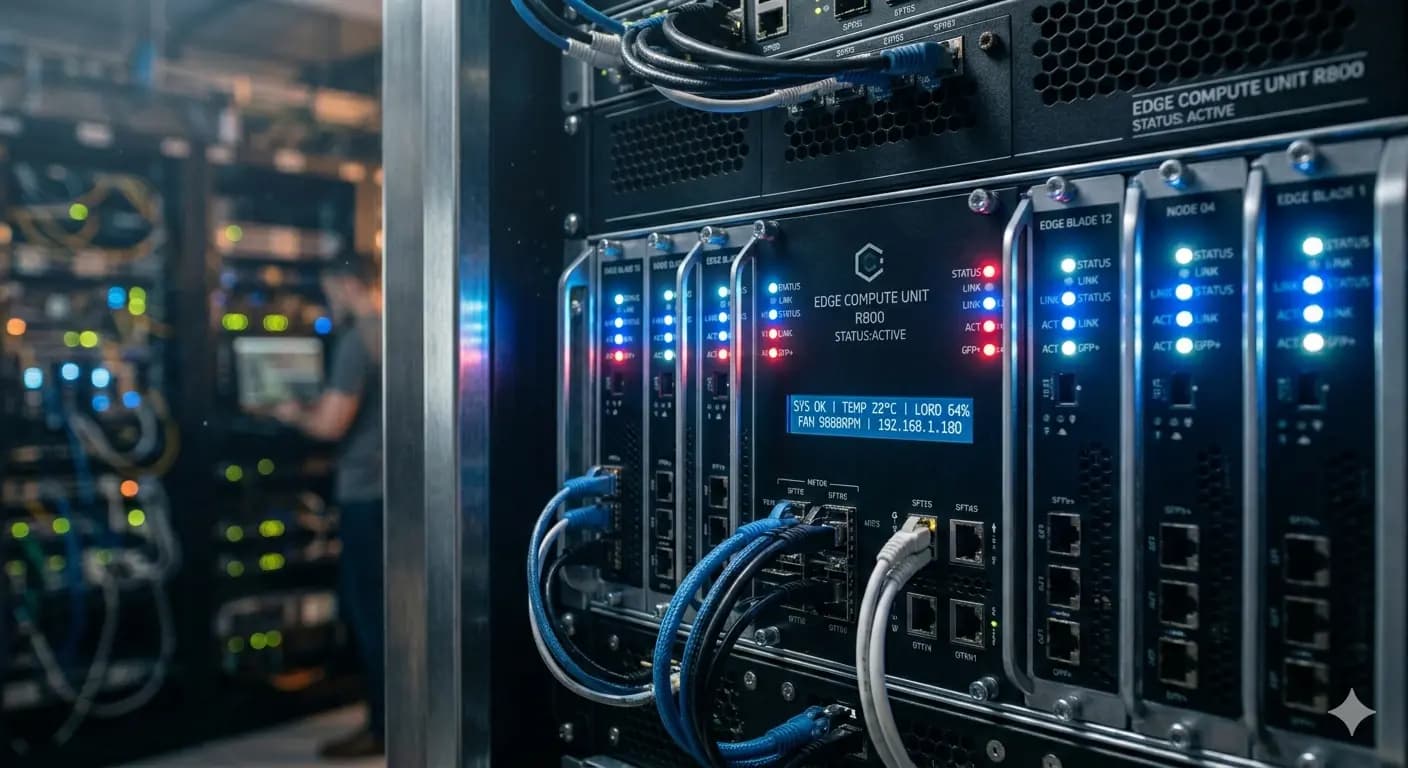
The ISP Is Becoming the Cloud Edge
Why connectivity providers may become the next distributed compute platform For decades, internet service providers have been described as “dumb pipes” companies responsible for moving packets from one place to another. But that description no longer reflects how modern networks are used
Today, connectivity is no longer just about accessing the internet. It is about connecting businesses to an entire ecosystem of cloud platforms, applications, communications systems, and increasingly artificial intelligence services. As those systems evolve, the network itself is beginning to play a much more active role in the infrastructure stack. In many ways, the internet service provider is no longer just a pathway to computing resources. It is becoming part of the computing platform itself.
Connectivity Means Something Different Today Basic internet access still serves a large market.
Residential users and small businesses often simply want reliable connectivity for transactions, Wi-Fi access, and everyday online tools. But even the simplest environments now rely heavily on cloud infrastructure. A small coffee shop today might use cloud-based point-of-sale systems, digital menu boards, streaming music, guest Wi-Fi, and cloud storage. Ten years ago that would have been considered advanced infrastructure. Today it is simply the baseline. The definition of connectivity has changed. What once meant “getting on the internet” now means connecting to: cloud platforms SaaS applications communications systems automation tools AI-powered services Networks have become the connective tissue linking businesses to the digital systems that power their operations.
The Network Is Moving Closer to the Business
Historically, internet service providers functioned like utilities. The provider connected the network to a building, ensured the service worked reliably, and the rest of the technology stack lived somewhere else. Today the relationship between businesses and their network providers is much deeper. Organizations rely on connectivity to link together their applications, infrastructure, offices, and cloud environments. The network is no longer just external plumbing it is part of the operational infrastructure itself. As a result, the line between traditional connectivity providers and managed infrastructure platforms is beginning to blur.
The Limits of Centralized Cloud Infrastructure
Much of the current discussion around artificial intelligence focuses on massive hyperscale data centers. These facilities require enormous computing power, energy resources, and cooling capacity. They play a critical role in training AI models and operating cloud platforms. But centralized infrastructure introduces an important limitation: distance. No matter how powerful the computing environment is, the experience for users still depends on the path between them and the infrastructure. If the connection to a distant data center is congested or geographically far away, performance suffers regardless of how powerful the systems on the other end may be. At the same time, bandwidth demand continues to grow rapidly.
The Bandwidth Arms Race
For many organizations, improving performance has historically meant purchasing larger internet connections. A business might start with a 100 Mbps connection, then upgrade to 1 Gbps, and eventually move toward 10 Gbps or higher as more services migrate to the cloud. But increasing bandwidth does not always address the root of the problem. Often the real challenge is not capacity — it is latency and distance. Organizations end up chasing larger pipes in order to compensate for infrastructure that lives far away. But customers do not actually care how large the pipe is. They care about the result. They care about how quickly applications respond, how smoothly systems operate, and whether their infrastructure supports their business.
Bringing Compute Closer to the Customer
This is where edge computing begins to change the architecture of the internet. Edge computing reduces the distance between applications and the people using them by deploying smaller compute environments closer to users. Not every workload requires the scale of a hyperscale data center. Many applications benefit from localized infrastructure that sits closer to where the data is generated and consumed. By shrinking the distance between applications and users, networks can dramatically improve responsiveness and efficiency. Instead of sending every request to a centralized facility hundreds or thousands of miles away, applications can run on infrastructure located much closer to the user.
Distributed Infrastructure Inside the Network
Internet service providers are uniquely positioned to support this shift. Unlike cloud platforms that operate large centralized regions, ISPs already maintain distributed infrastructure across their networks. Regional points of presence, aggregation facilities, and access network sites often sit geographically closer to users than hyperscale cloud regions. These locations can serve as natural points for deploying distributed compute environments. When combined with modern networking platforms such as SD-WAN, traffic can be intelligently directed to the most appropriate compute cluster based on geography, performance, or application requirements. Instead of sending every request to a distant cloud region, workloads can run on infrastructure embedded within the network itself. For customers, this can feel like having access to a localized mini data center without needing to build or operate the infrastructure themselves.
AI Is Accelerating the Need for Edge Infrastructure
Artificial intelligence is accelerating the demand for distributed computing. Organizations of all sizes are exploring ways to integrate AI capabilities into their operations. Some deploy centralized AI infrastructure, while others rely on cloud services. But even organizations with large centralized environments face a common challenge: geography. A company may operate data centers or rely on cloud regions, yet still have offices or facilities located far from those environments. In those cases, localized compute infrastructure can significantly improve performance. This is one reason why edge computing is gaining increasing attention across the industry. From Highways to Destinations For most of the internet’s history, the telecommunications industry has focused on building bigger and faster networks. The competitive race between providers often centered on increasing bandwidth and expanding infrastructure capacity. That race will continue.
Networks will always need to grow.
But the next stage of evolution may involve something more. Instead of simply building larger highways, networks may also begin building destinations. Distributed compute clusters embedded within ISP networks could become localized infrastructure platforms that complement centralized hyperscale data centers. Large cloud regions will continue to play a central role in AI training and large-scale computing. But smaller, distributed environments located closer to users may increasingly support real-time applications, edge workloads, and latency-sensitive services.
The Next Evolution of the Internet
As artificial intelligence, distributed applications, and cloud-native systems reshape how businesses operate, the role of the network is evolving. Internet service providers already operate much of the physical infrastructure required to support distributed computing environments. Providers that adapt to this shift may find themselves doing more than simply connecting users to infrastructure. They may become part of that infrastructure. The next phase of the internet may not just be about connecting to the cloud. It may be about bringing the cloud closer to the network.
Written by

Director of SASE
Matt Snell is the Director of SASE and Network Innovation at WiLine, bringing over two decades of hands-on experience in telecom and network engineering. He began his journey at ITT Tech in Spokane, graduating in 2002, and has been building and optimizing networks ever since.